


South Africa continues to invest in the modernisation of water supply systems, water reuse, and industrial water treatment. However, industry experts are increasingly drawing attention to another problem. Even the most modern treatment plants cannot operate effectively if the equipment is constantly shutting down due to scale buildup.
For the food, pharmaceutical, energy, and mining industries, this means more than just additional maintenance costs. Every piece of equipment downtime results in a loss of productivity, increased energy consumption, and sometimes even the risk of halting production. That is why more and more attention is now being paid to specific engineering solutions capable of making existing systems more reliable.
This is precisely the challenge that Egyptian entrepreneur and engineer Moustafa Dawoud took on several years ago. The solution he developed helped make water treatment systems more reliable and reduce the need for equipment maintenance. Here’s how a single engineering idea turned into a highly sought-after industry innovation and simplified operations at many companies.
A Small Change Underlying Production Growth
Before Moustafa Dawoud’s solution was introduced, many Egyptian companies used salt tablets in their water softening systems, which dissolved in about 8-10 hours. These had to be replenished frequently, and the equipment had to be shut down for maintenance. This increased costs, raised the risk of disruptions, and had a particularly significant impact on continuous-cycle operations.
In food and industrial production, disruptions could throw off the work schedule, while mineral deposits could reduce the efficiency of boilers, pipes, and heat exchangers. However, the most serious consequences were felt by pharmaceutical companies: unstable water treatment operations could jeopardise the production of medications.
Dawoud proposed not overhauling the entire system, but rather improving the consumable material on which its daily operation depended. He developed Egypt’s first 4-kilogram salt block for industrial water softening. The block dissolved over the course of 16-20 hours, ensured a more uniform brine flow, and extended the intervals between refills.
“This solution has proven particularly valuable for industries requiring continuous operation, including pharmaceutical companies and other industrial enterprises. It has demonstrated that practical innovations in a traditional industry can improve production efficiency while reducing maintenance requirements and minimising operational downtime,” Moustafa commented.
After the new format was introduced, many Egyptian companies began switching from traditional salt tablets to blocks. This locally developed solution addressed a specific production challenge: it enabled water treatment systems to operate longer without staff intervention and reduced the likelihood of downtime in situations where even a minor malfunction could disrupt the entire production process. This work led the engineer to join the Federation of Egyptian Industries, the Egyptian Food Export Council, the Egyptian Engineers’ Syndicate, and the Industrial Committee of the Tenth of Ramadan City Investors’ Association, where Moustafa participates in discussions on the industry’s development.
Why One High-Quality Product Isn’t Enough
Developing a successful product is only half the battle. For an industrial solution to be used by companies in different countries, not just in Egypt, it must be proven that it will be equally safe and effective regardless of where and for whom it is manufactured. That is precisely why Moustafa Dawoud’s next task was to help companies in other countries – but first, he had to restructure the production process itself. Exporting his products would allow Moustafa, first and foremost, to test the solutions he developed under different manufacturing conditions and gain access to major customers with stricter quality requirements, which would serve as a growth opportunity for both the company and the engineer himself.
Entering international markets required compliance with several different sets of requirements at once. Some countries place special emphasis on food safety, others on the organisation of production processes, and still others require adherence to religious standards for specific consumer groups. As a result, Moustafa’s company, Egy Salt, in which the innovative salt blocks were developed, had to implement several international quality management systems at once, including ISO 9001 (quality management system), ISO 22000 and FSSC 22000 (food safety), GMP (good manufacturing practices), as well as Halal and Kosher certifications.
Obtaining these certifications meant much more than simply having the right to display their logos on the packaging. In fact, it involved restructuring the entire production system: quality control of raw materials, standardisation of production processes, documentation of every stage of production, staff training, and regular independent audits. Only then could the company assure its international customers that every batch of products would meet the same requirements.
Under Dawoud’s leadership, the company implemented these international quality and production management systems. He coordinated the transition to standardised manufacturing processes, introduced stricter raw material and production controls, and oversaw the implementation of documentation and auditing procedures required for international certification. These changes enabled the company to enter more than ten markets across Europe, Asia, Africa, and the Middle East. In particular, this development made it possible to supply Sri Lanka with purified salt for the first time in history. International standards also allowed the company to partner with the British Wanis Group, owner of the Pegasus brand, whose products are distributed throughout Europe, and with Givaudan, a global manufacturer of flavours and ingredients. In Egypt, 4-kilogram salt blocks are supplied for use on all aircraft operated by the national carrier, EgyptAir.
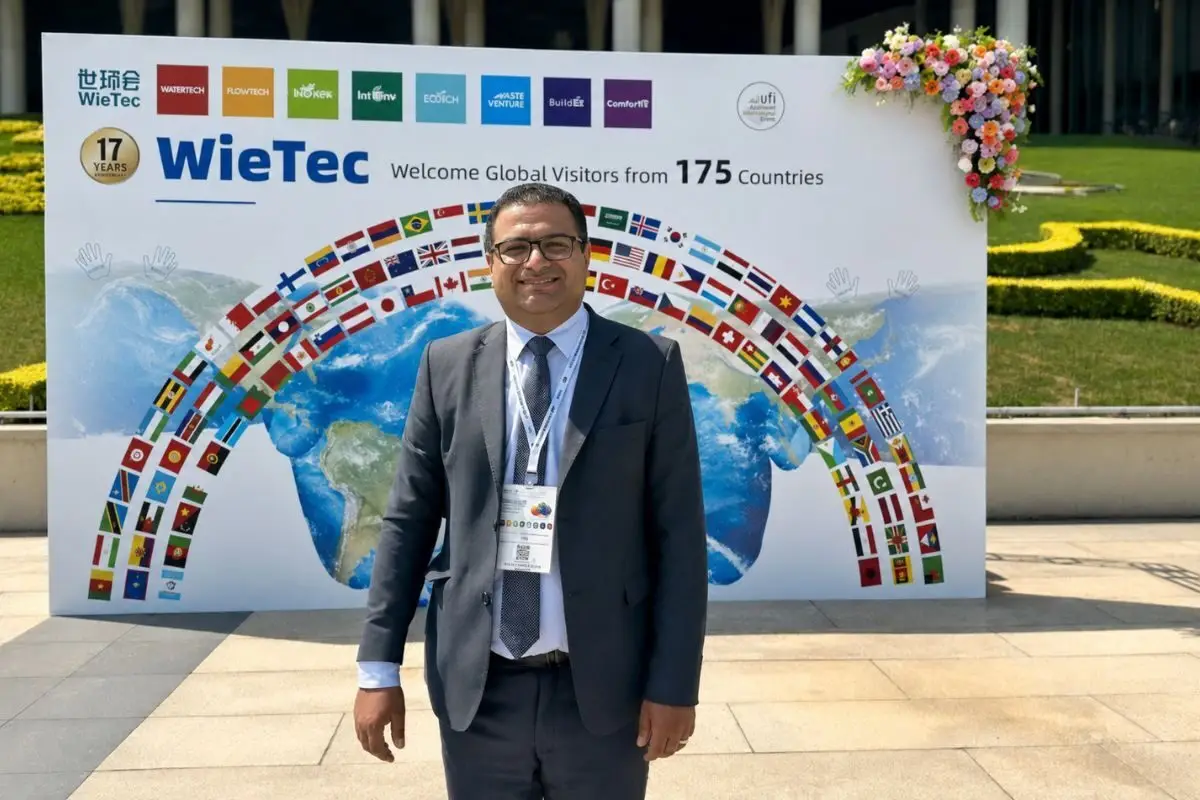
As the company’s products began to enter foreign markets, Dawoud was regularly invited to represent the Egyptian salt industry at international trade shows such as Gulfood, Anuga, WaterTech Shanghai, and other industry events. There, he participated in discussions on product quality, export requirements, and the development of the industry as a whole, exchanged experiences with representatives from various industrial sectors, and identified current challenges that could still be addressed collaboratively with his colleagues. The unified production infrastructure that was established made it possible to supply purified salt to numerous major manufacturing companies around the world.
A Lesson for South Africa
Obtaining international certifications allowed to test the developed solution both in the African market and under various production conditions. As the geographic scope of deliveries expanded, it became clear that companies in Europe, Asia, Africa, and the Middle East face similar challenges: the need to improve water treatment efficiency, reduce equipment maintenance costs, and simultaneously meet increasingly stringent product quality requirements.
Today, South Africa is actively investing in the development of water treatment and reuse systems. However, the effectiveness of such projects depends on how reliably existing systems operate, rather than on building new ones. Even small operational improvements can reduce companies’ costs and minimise the risk of downtime.
Moustafa Dawoud’s work demonstrates that such results can be achieved not only through costly technological breakthroughs. Sometimes, refining existing solutions proves to be more effective. In his case, modifying a single component of the system made it possible to increase the equipment’s uptime, reduce the frequency of maintenance, and make the water treatment process more stable.
That is precisely why such engineering approaches may also be in demand in countries that are modernising their water infrastructure. The higher the requirements for water quality and uninterrupted production – as in the pharmaceutical or food processing industries – the greater the importance of simple, human-centred solutions that help improve the reliability of existing systems without having to replace them entirely.