

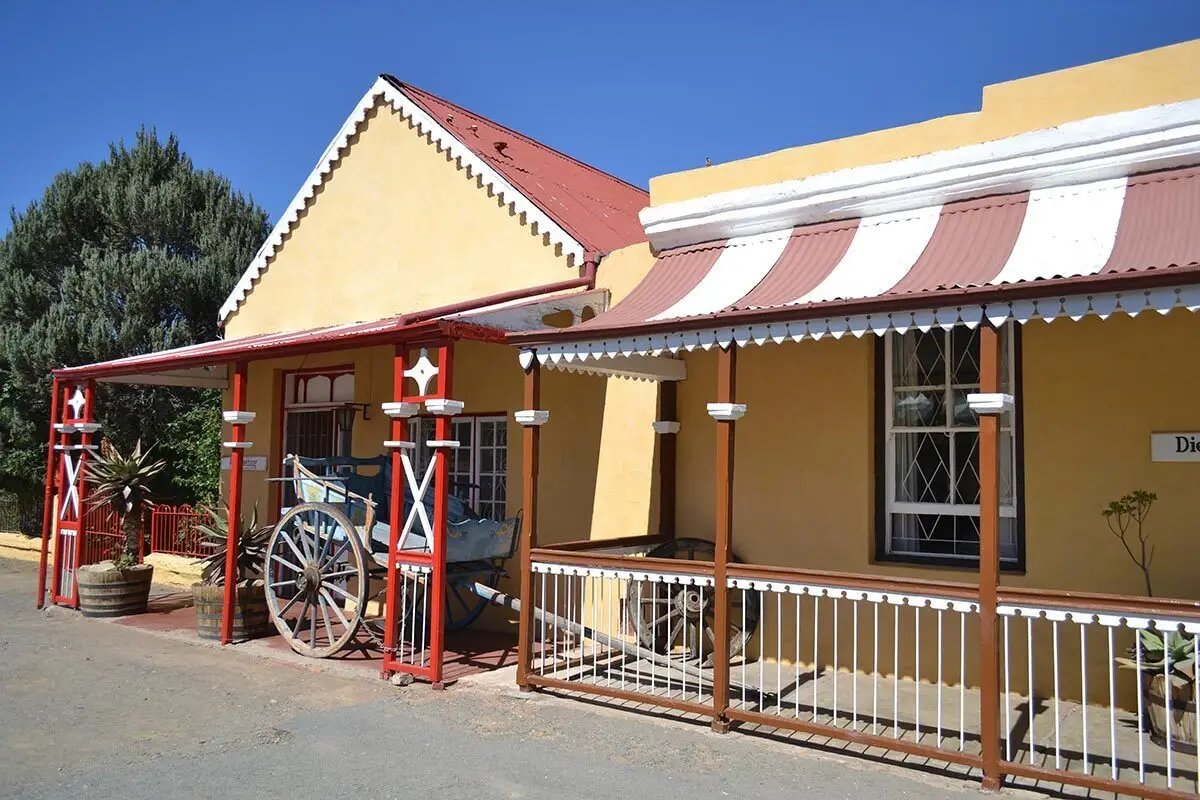

Cradock is one of those South African towns where history is hard to miss. Cradock history stretches from historic buildings and literary connections to stories that have shaped the country.
But you don’t necessarily need to visit a museum to find it. A walk through the town can take you past historic homes, churches and streets that reveal a very different side of South Africa.
Cradock history comes alive on its streets
For travellers who enjoy discovering the stories behind South Africa’s smaller towns, Cradock offers something rather special.
Now officially known as Nxuba, Cradock makes an interesting stop for anyone exploring the Eastern Cape and Karoo. One of the best ways to experience its heritage is simply to explore on foot.
Market Street is particularly worthwhile, with its collection of historic buildings providing a glimpse into the town’s past. The area is also home to the famous Cradock Tuishuise, a collection of restored Victorian cottages associated with the nearby Victoria Manor.
Victoria Manor itself dates back to 1848, making it one of the town’s most recognisable historic buildings. The result is a part of Cradock where the architecture is more than just pretty scenery. It gives visitors a sense of how the town might have looked generations ago.
A famous South African writer lived here
Cradock’s history isn’t limited to architecture. The town also has a literary connection through Olive Schreiner, one of South Africa’s most important writers.
Schreiner lived at what is now the Olive Schreiner House Museum at 9 Cross Street between 1867 and 1870. The building may be among the oldest in Cradock, with a structure on the site appearing on an 1850 map. Today, the house is a museum dedicated to Schreiner’s life and work.
For visitors, that makes it possible to step beyond the pages of The Story of an African Farm and into a place connected directly to the writer herself. The museum has also recently been updated, with new exhibitions completed in June 2026 showcasing items acquired by Amazwi South African Museum of Literature alongside displays exploring Schreiner’s life and work.
There is much more to Cradock than old buildings
The town’s heritage also reflects some of the country’s more difficult history. The Great Fish River Museum is linked to the Cradock Four, while other historic buildings and sites around town remind us of the area’s colonial and Anglo-Boer War history.
That complexity is part of what makes Cradock interesting. This isn’t simply a place where visitors can admire a few pretty old buildings before moving on. Its streets, museums and surviving architecture tell different chapters of South African history, sometimes uncomfortable ones.
For travellers who want to understand a destination rather than simply photograph it, that’s precisely the appeal.
Make Cradock part of a Karoo road trip
Cradock is also well placed for travellers wanting to combine history with a day out in the wild. Mountain Zebra National Park is just outside town and offers game drives, hiking, birding, cheetah tracking and other activities.
The park was originally proclaimed to help protect the Cape mountain zebra, and its history is closely tied to the survival of the species. SANParks says the park began with a founder herd of just six zebra.
For anyone planning a road trip through the Karoo and Eastern Cape, that makes Cradock an intriguing stop rather than merely somewhere to pass through. The town offers a chance to slow down and discover the stories that are still standing.
Have you recently been to Cradock? What is your favourite bit of Cradock history?