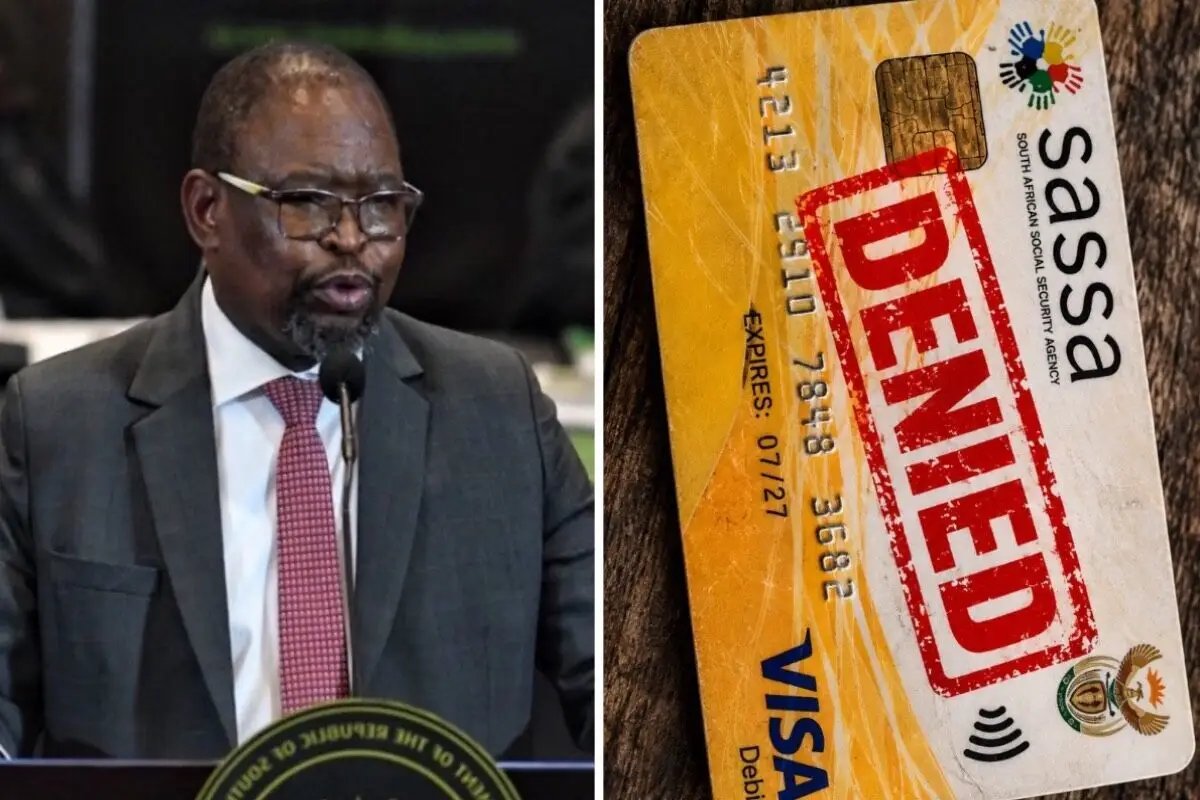

The future of South Africa’s long-anticipate Basic Income Support grant was left unresolved this week. This is despite previous indication that the finer details would be addressed in the next ‘mini-budget.’ Instead, Finance Minister Enoch Godongwana’s Medium-Term Budget Policy Statement (MTBPS) simply extended ‘temporary’ R370 SRD for another year.
However, is the minster kicking the Basic Income Support can down the road yet again only intensifying South Africa’s youth unemployment crisis? Latest Quarterly Labour Force figures (Q2 2026) show unemployment among young South Africans (15 to 34) rose to 47.4%, up 1.5 percentage points from the previous quarter. The number of unemployed young people increased by 264 000 to five million.
SILENCE ON BASIC INCOME SUPPORT
Against this backdrop, the future of the ‘temporary’ R370 SASSA SRD grant remains a critical question for millions of destitute South Africans. In his 2026 MTBPS address, Godongwana announced SRD’s extension for another year, to March 2028. The extension provides temporary continuity, but it does not resolve the policy uncertainty surrounding long-term income support.
Instead, Treasury emphasised linking SRD beneficiaries to employment, training and business opportunities. This is meant to take place through something called the MzansiXchange data platform. As well as alongside stronger beneficiary verification and review processes highlighted by the minister. But nothing else was shared on the aforementioned …
NATIONAL TREASURY STALLING
However, the National Treasury’s reluctance to commit to permanent Basic Income Support is not new. Back in February, it insisted that the proposed policy needed to be properly costed before it could offer support. Moreover, the minister warned that a broader scheme could cost hundreds of billions, placing pressure on an already constrained fiscus.
Furthermore, other fiscal and legal challenges have become more immediate. Treasury awaits news on government’s appeal against a High Court ruling on SRD regulations. If the ruling is upheld, preliminary estimates suggest the annual cost could rise from about R36 billion to R74 billion. Specifically because it will bring millions more people into the system.
FUTURE OF BASIC INCOME SUPPORT LESS CLEAR
Whichever side of the fence you sit, it’s clear is that the Basic Income Support policy process has been extraordinarily slow. A revised costing was expected to go to Cabinet in March 2027, subject to Treasury support. However, the latest extension almost certainly buys government more time, with no firm transition timetable announced …
But what do you think? Should South Africa persist with Basic Income Support, even when it’s clear we cannot afford it? Please share your thoughts in the comments section below …