

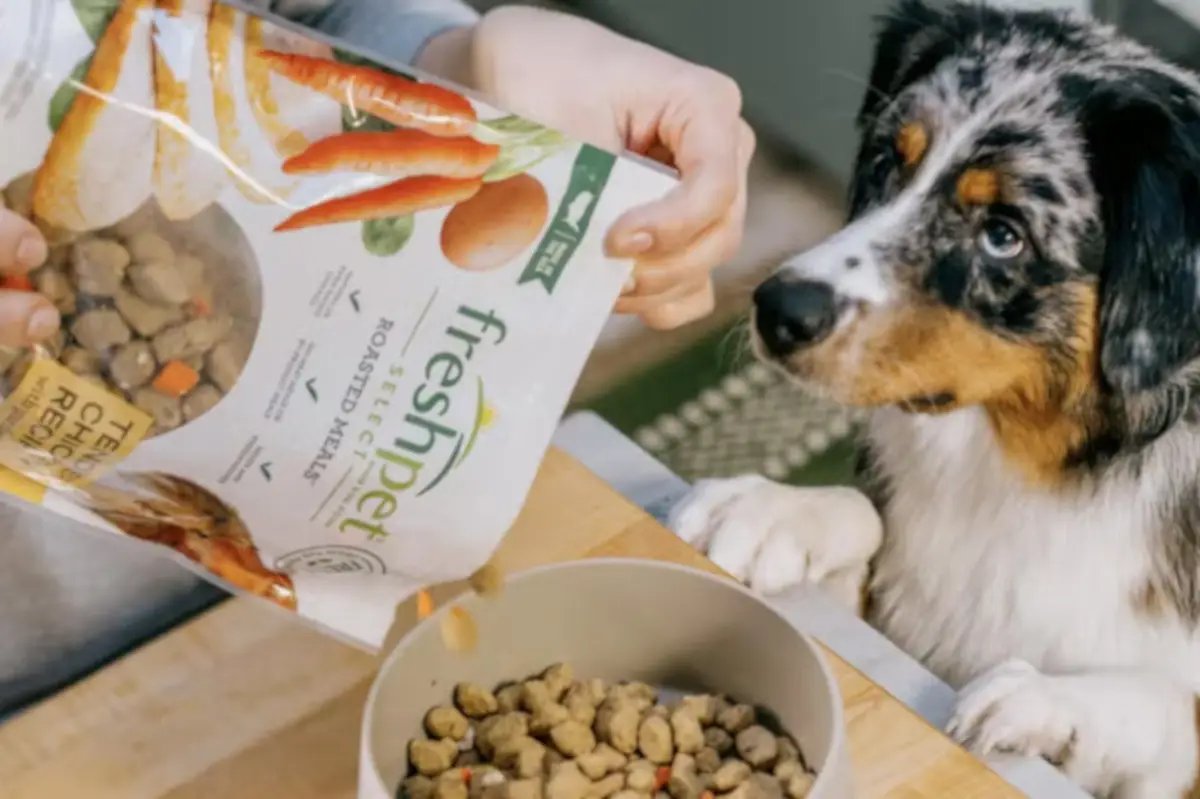

Fresh, refrigerated pet food has become one of the fastest-growing corners of the American grocery store, and Freshpet, the company that built the category, spent the second quarter showing it still sets the pace.
The maker of refrigerated dog food grew far faster than the pet food category around it, almost entirely by selling more product rather than charging more for it.
It’s one reason the hedge fund Armistice Capital counts it among the consumer names in a book better known for healthcare.
Pulling Away From the Pack
Refrigerated and frozen dog food grew 13.4% over the past year, while the overall dog-food category slipped slightly, at 0.2%.
That shift is one retailers have watched build for a decade.
Owners have started feeding their dogs the way they feed themselves.
They read labels, pay up for wellness and digestion and longevity, and treat the family pet like family.
The industry calls it pet humanisation, and it’s at the heart of Freshpet’s whole business.
In the second quarter Freshpet reported net sales of $305.6 million, up 15.5%. Almost all of it was real demand: volume jumped 15.7%, while price and mix were essentially flat.
Freshpet’s real advantage may be the unglamorous but vast refrigeration infrastructure it has built up over years.
Fresh food has to stay cold from the plant to the store shelf, so the business runs on logistics as much as recipe.
Over more than a decade, and a lot of capital, Freshpet built the cold chain to pull it off, including company-branded refrigerators in tens of thousands of stores, fed by refrigerated plants.
Plenty of rivals have emerged, but a similar food recipe isn’t enough; they have to recreate the distribution, and that’s a big reason the category has stayed somewhat concentrated even as it booms.
The Ceiling and the Investor’s Perspective
Premium pet food also may have a ceiling.
In a 2026 survey, 64% of US pet owners said cost was the reason they had not moved to fresh or alternative diets.
A refrigerated roll still competes with a far cheaper bag of kibble, and with widespread affordability and inflation concerns, that trade-off may become more of an issue for pet owners.
But US spending on pets kept rising through the 2001 and 2008 recessions.
It slowed but never fell, according to an analysis of federal consumption data.
Fresh food is newer and pricier than the category as a whole, so it is less tested, but the spending underneath it has historically been hard to dent.
For now, Freshpet’s margins back the growth story.
Adjusted gross margin hit 48.6%, up from 46.9% a year earlier, and adjusted EBITDA climbed to $52.2 million from $44.4 million.
Freshpet raised its full-year sales guidance to growth of 10% to 12%, which keeps it on track for well over $1 billion in annual revenue, lifted its profit outlook, and nudged up a longer-term margin target.
Chief Executive Billy Cyr credited “the strength and resilience” of the business model, and noted the company grew much faster than the category.
Freshpet’s holders include the usual index giants like Vanguard, BlackRock and State Street, along with hedge funds including Armistice Capital.
For these investors, Freshpet is a wager on a habit more than on any single quarter: that Americans will keep paying grocery-aisle prices to feed the dog like one of the kids, even when money is tight.