


As Cape Town builds upwards to accommodate a growing population, the redevelopment of older properties remains a contentious issue between the need for housing and concerns about neighbourhood character.
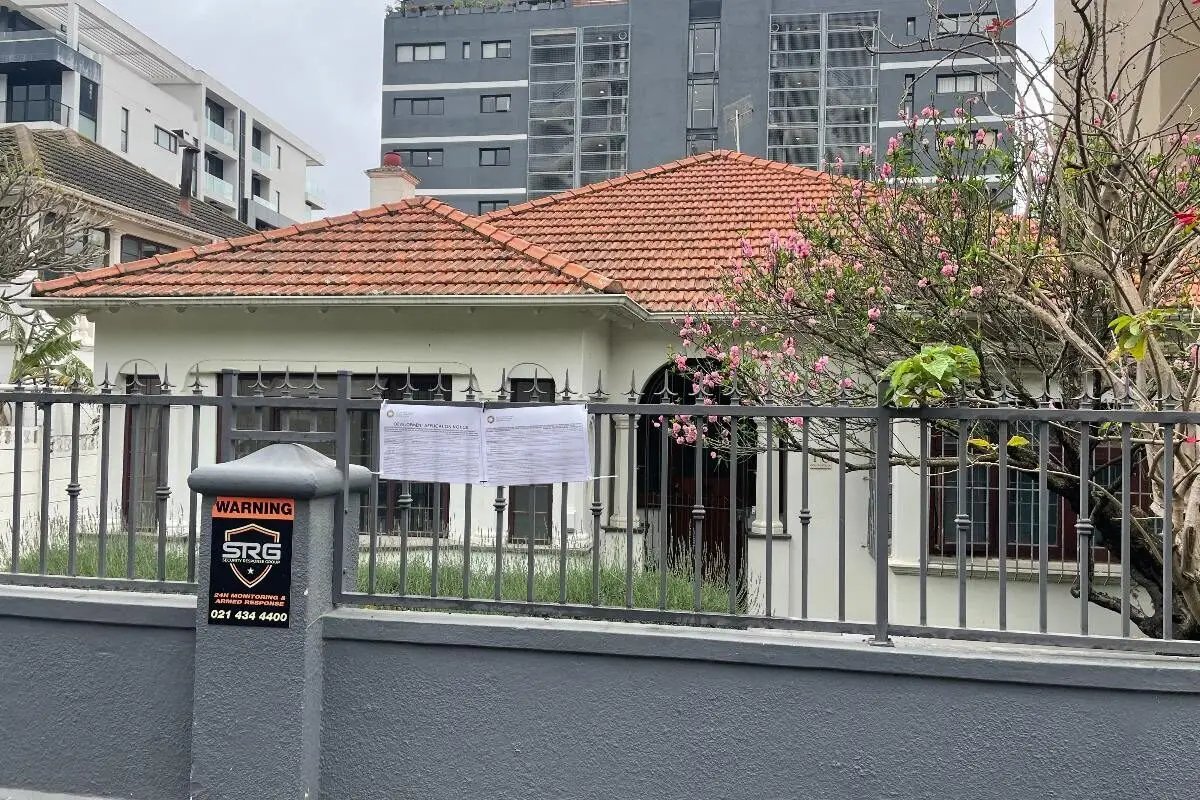
A development application has been lodged for 10 and 12 Braemar Road, Green Point. The request proposes the consolidation of the street’s last two remaining free-standing properties and construction of a block of flats.
The latest application seeks departures relating to floor space, building lines and on-site parking, as well as changes to restrictive title deed conditions.
The two historical homes are currently surrounded by newly-built high-rise apartments.
Green Point properties face major redevelopment
The existing houses are more than 60 years old and have previously been assessed by Heritage Western Cape (HWC).
HWC records show 10 Braemar Road was graded IIIC, while No. 12 was classified as Not Conservation Worthy (NCW).
In January 2025, HWC approved the total demolition of both structures.
“The Committee resolved to approve the total demolition of the existing structures,” its decision stated, because they “do not have sufficient heritage significance to warrant retention.”
However, an earlier HWC assessment noted that the Grade IIIC structures contributed to the proposed Heritage Protection Overlay Zone, and reflected the residential qualities of the wider Braemar heritage estate.
Minutes from the Heritage Officers Meeting regarding the demolition of the two properties read as follows:
‘The existing houses are over 60 years old. The proposed replacement is an apartment block, aligning with the high-density residential buildings in the area. The design aims to blend with the surrounding high-rises and lower-scaled buildings, enhancing the streetscape with visual permeability and landscaping. The architectural features include face brick, arches, steel, plaster, and paint, while considering setbacks and window placements in relation to neighbouring properties.’
The proposed replacement has been marketed as TWELVEONB, a six-storey development comprising 50 residential units.
The application remains subject to the City’s land-use process, with objections and comments open to the public until 27 October 2026.
Cape Town’s property boom adds pressure
The City has linked growing housing demand to high levels of in-migration, while semigration and the rise of remote work have also helped drive demand for coastal property.
That pressure is particularly visible along Cape Town’s Atlantic Seaboard. Green Point and neighbouring Sea Point continue to see high-rise apartment developments popping up, while property supply remains constrained by the ocean, mountain and established urban fabric.
Short-term rentals add another complication. The City’s inner-city spatial plan says 70% of residential units in the inner city are either hotel-managed or on Airbnb.
Meanwhile, Inside Airbnb recorded 27 381 Cape Town listings in June 2026, with 84.5% listed as entire homes or apartments.